Neoclassical Restraint in a Romantic Wilderness
Constructed between 1783 and 1787 by Dutch consul Daniel Gildemeester and expanded by the Marquis of Marialva, Palácio de Seteais is an extraordinary triumph of neoclassical symmetry situated on the northern flank of the Serra de Sintra. While Lord Byron and 19th-century romantics celebrated the estate's triumphal arch and mythological fresco salons, modern travelers discover one of Portugal's most serene pool enclosures concealed within its lower formal parterres.
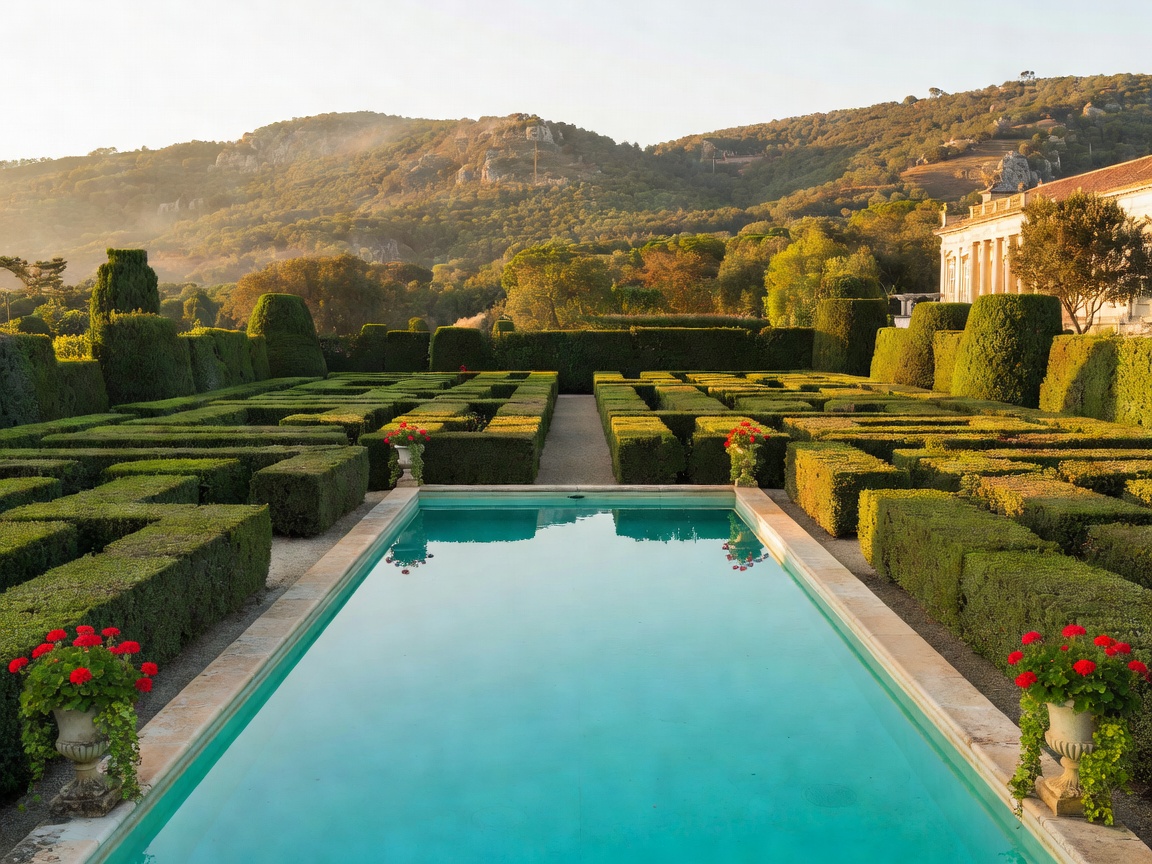
The pool’s placement was governed by strict architectural preservation guidelines. Rather than placing a modern concrete pool deck near the palace facades, the hydraulic basin is discreetly recessed inside geometric boxwood parterres, lined with regional Portuguese marble coping. The effect is that of a calm aristocratic reflecting pool, where swimmers can glide across the surface while looking upwards at the Moorish Castle ramparts and the fairy-tale turrets of Pena Palace towering above the mist.
Navigating the Sintra Microclimate
The microclimate of Sintra is singular: damp Atlantic currents rise over the granite mountain range, producing sudden blankets of mist (nevoeiro) and temperatures up to 8°C cooler than downtown Lisbon, just 30 kilometers to the east. This climate creates lush botanical vitality—magnolias, camellias, and giant tree ferns thrive—but it requires intelligent pool engineering.
The Seteais basin is equipped with precision water-heating infrastructure that maintains warm temperatures from early spring through late autumn. Furthermore, the thick surrounding boxwood hedges (buxus sempervirens) serve as effective natural thermal barriers, filtering out cold mountain breezes and preserving the sun’s warmth within the sunken terrace.
Acoustic Stillness and Aristocratic Seclusion
Unlike contemporary beach resorts with upbeat music and social cocktail bars, the pool at Palácio de Seteais provides contemplative silence. The sonic environment consists solely of distant rustling pine branches, the trickle of 18th-century stone fountains, and birdsong echoing from the surrounding Quinta da Regaleira forest.
Curatorial Assessment: The Experience Evaluated
- Incomparable historic setting inside a classified 18th-century national palace.
- Exceptional natural windbreak provided by formal geometric hedge gardens.
- Panoramic views spanning from the Sintra ridge to the Atlantic coastline of Colares.
- Intimate scale: only 30 guest rooms ensure no crowded pool deck conditions.
- Sintra's pervasive morning sea mist can delay direct sunlight until midday.
- Modest basin dimensions prioritize peaceful floating rather than long-distance fitness laps.
- Heritage regulations prevent modern shade sailings, relying instead on traditional umbrellas.
Palatial Hospitality and Tea-Time Traditions
Poolside refreshments at Seteais pay homage to Portuguese aristocratic hospitality. Uniformed staff deliver silver trays with fresh lemonade infused with garden mint, local Colares DOC wines, and traditional Sintra queijadas and travesseiros from Casa Piriquita. Guests seeking post-swim relaxation can retreat to the Anantara Spa pavilion, housed in an atmospheric former stone outbuilding nestled among the palace orchards.